
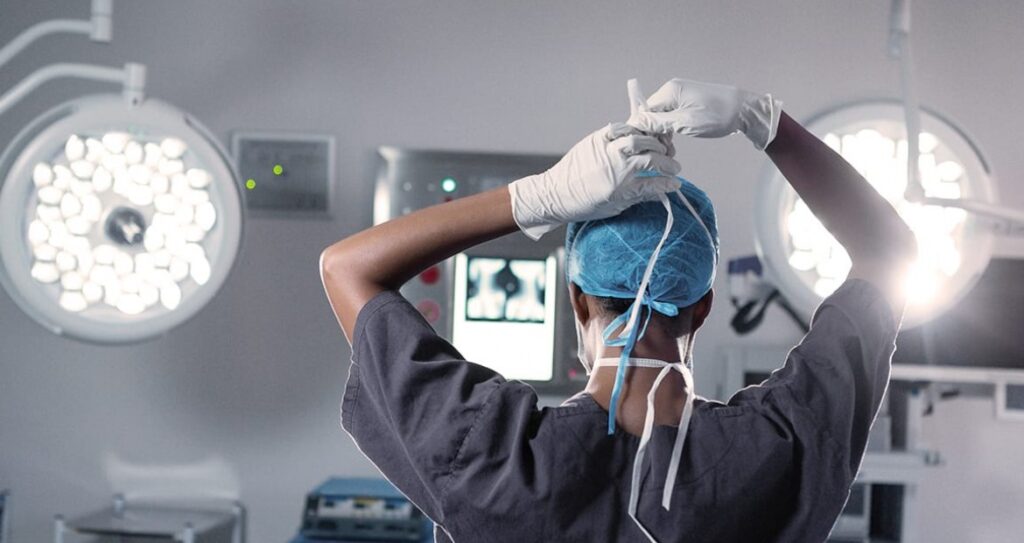
The number of spinal surgeries has increased dramatically in recent years – and the trend is still rising. Germany is even at the forefront in a European comparison. Procedures to stiffen vertebral bodies alone have increased by 43 percent since 2007. For Prof. Dr. Michael Akbar, this is a warning sign: surgery should always be the last option.
This increase has many reasons – and only some of them lie in actual illnesses. Often, surgery is performed more quickly than is medically necessary. Some patients are pushing for a quick solution, while others are put under pressure to make a decision because they are left alone with the diagnosis. At the same time, our healthcare system is structured economically in such a way that operations are often more lucrative than conservative methods. However, figures show that complaints improve on their own in around 80 percent of cases within two months. The body heals – if you let it.
Another factor is the large number of minimally invasive surgical techniques. Many of these are useful, but not every doctor is proficient in them. Mistakes lead to numbness, damaged nerve fibers, or, in the worst case, paralysis. Revision procedures then become necessary. That’s precisely why the following applies: Anyone considering spinal surgery needs experience, expertise, and often a second opinion.
Spinal surgeries – is surgery performed too quickly?
The impression quickly arises: the number of operations is increasing, and with it the concern of ending up under the scalpel too soon. Added to this are economic incentives, different qualifications of doctors, contradictory statements from health insurance companies, and a healthcare system that does not always allow enough time for thorough diagnostics. Many patients experience pressure even before the cause of their complaints is clear.
At the same time, the spine is a sensitive area. If surgery is performed too early, avoidable risks arise. If surgery is performed too late, permanent damage to the nerves and spinal cord is threatened. That is precisely why every decision needs time, an honest assessment, and an experienced team.
The real increase and its causes
The actual figures clearly show: The increase is not automatically a sign of more illnesses. Many reasons work together – better diagnostics, new methods, economic structures, and the desire for quick solutions. In many cases, an example from everyday life is significant: An MRI finding seems dramatic, but the image does not automatically explain the pain.
Properly classify back pain
Back pain is one of the most common complaints of all. It is unpleasant, restricts everyday life, and frightens many people. But pain does not automatically mean that the spine is damaged or that the lumbar spine needs surgery. Often they arise from tension, poor posture, stress, or lack of exercise.
Why patience is often the decisive factor
The body can regulate a lot itself. Therapies such as exercise, targeted exercises, warmth or conservative therapy approaches work – if you give them time. Most problems improve without the need for intervention.
Spine: What really happens with complaints?
The spine is a complex system of vertebrae, intervertebral discs, nerve roots, the spinal cord, and many small parts that work together. A bottleneck in the vertebral canal, spinal canal stenosis, or irritation of the nerves can cause pain, numbness, or problems standing. But here, too, the following applies: Not every finding needs immediate treatment. The crucial factor is whether nerves are actually at risk.
Operations on the lumbar spine – when they make sense
Operations make sense when nerves are threatened, paralysis occurs, gait becomes unstable, or the symptoms remain unchanged for weeks despite therapy. A thorough diagnosis is a prerequisite. And: An operation is always an individual decision – never an automatic process.
Herniated discs and herniated discs – why not every finding needs an operation
Many herniated disc findings look dramatic, but do not lead to complaints. An example: A large incident can remain calm, while a small pressure on the nerves causes severe pain. Only when legs fail, the spinal cord is endangered, or therapies do not work, an operation becomes really relevant.
Second opinion & experienced teams – the most important protection
A second opinion is not a sign of distrust, but a right. It protects against unnecessary interventions and opens up better treatment options. An experienced team recognizes when an operation is necessary – and when it is not. Expertise arises through many cases, calm decisions and the focus on what really helps a person.
Conclusion: Time, clarity, expertise
Many decisions seem more urgent at first glance than they are. Good diagnostics takes the pressure off, creates clarity and helps to choose an operation only when it is really necessary. Movement, precision and experience ultimately form the basis for sustainable treatment – not the quick solution.

